
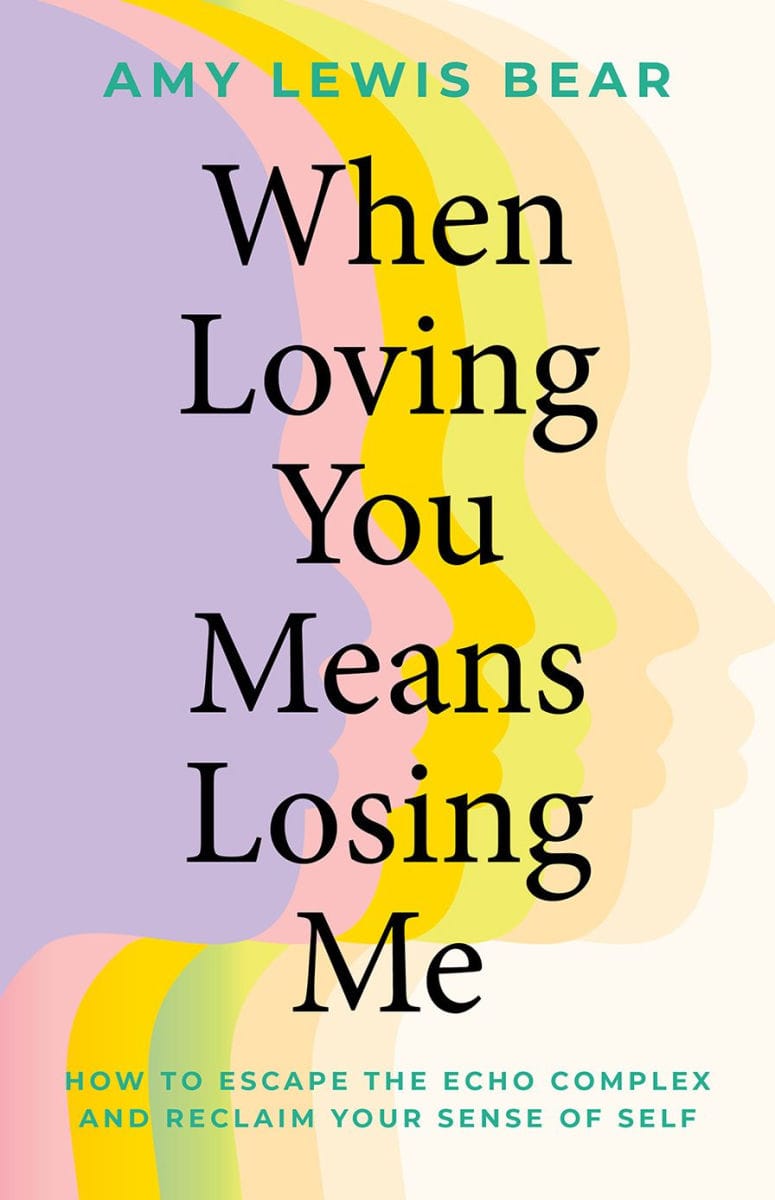
 A clear path back to the self for every person who feels they have become lost in their relationship.
People enter relationships looking for love, safety, and fulfillment. But sometimes closeness takes a dark turn. One partner fears intimacy and mistreats the other, first subtly, then openly. The hurt partner, confused and in pain, adopts behaviors meant to appease, desperate to regain affection or keep the peace. Gradually, they become a reflection—or echo—of their partner’s fear and fall into a trap of losing themselves.
Psychotherapist Amy Lewis Bear knows this pain firsthand, and in When Loving You Means Losing Me, she clearly identifies this phenomenon as the Echo Complex. The Echo Complex is a pattern of reactive thoughts, emotions, and behaviors that an individual develops in response to their partner’s fear of genuine intimacy. Rather than demonstrating love, the fearful partner pushes the other person away through distancing behaviors, manipulation, and emotional isolation. In response, the intimacy-seeking partner fights harder for connection, conforming to an inauthentic version of themselves in an effort to find acceptance. But this only leaves them feeling consumed, exhausted, and more disconnected from both their partner and themselves.
Healing, however, is possible. Amy Lewis Bear shines a piercing light on why some partners withdraw emotionally, and why molding yourself to get closer only deepens the damage. Through Amy Lewis Bear’s story and the raw experiences of others whom she has helped, you will discover the hidden psychological forces that block emotional intimacy, the paradoxes that keep people stuck, and the way toward emotional safety, wholeness, and love that doesn’t require you to be anyone but who you are.
“This book puts words to what so many women feel but struggle to explain: the slow, quiet loss of self that can happen in love. Amy Lewis Bear masterfully reveals how emotional disconnection erodes confidence, identity, and voice, while guiding readers back to clarity, self-trust, and wholeness. When Loving You Means Losing Me is not just eye-opening; it’s freeing. Every woman who has ever questioned herself in a relationship needs this book.”
—Rainie Howard, bestselling author of The Love Habit: Daily Self-Care Practices for a Happier Life and Healthier Relationships and Addicted to Pain: Renew Your Mind and Heal Your Spirit from a Toxic Relationship in 30 Days
“Grounded in solid psychoanalytic theory and trauma research, this book is an essential resource for both therapists and survivors seeking real understanding and recovery.”
—John Gray, PhD, bestselling relationship author of Men Are from Mars, Women Are from Venus
“Through many years of personal and professional experience, Amy Lewis Bear helps us understand the dangers of losing oneself in a relationship. Among other essential insights, she illuminates twelve core truths and seven paradoxical cycles that culminate in abusive relationship dynamics. Then she walks us so brilliantly through the process of healing and ending self-neglect to help us reconnect with our true selves…. This is a masterfully written must-read that helps articulate the full extent of the damage and pain that, once acknowledged, can be healed.”
—Tara Arnold, PhD, licensed clinical social worker; founder and clinical director of Deepen Wellness & Psychotherapy
“An eye-opening, heart-awakening guide for anyone who has slowly disappeared inside a relationship. With tenderness and insight, Amy Lewis Bear invites the reader to pause, listen beneath the surface, and recognize the subtle ways we trade our needs, desires, and values—our very sense of self—for connection.”
—GG Renee Hill, author of Story Work: Field Notes on Self-Discovery and Reclaiming Your Narrative
“Anyone who has loved and struggled to understand why their energy is consumed, their empathy depleted, and their heart fortified against lies will find this book on their nightstand, dog-eared, highlighted, and with pencil marks in the margins on their personal journey to finding themselves again.”
—Christina Chapman, medical social worker and case management educator
“This book will benefit psychotherapy practitioners working with clients who are experiencing relational abuse, as well as those with lived experience of relational abuse who are seeking a deeper understanding of their experiences.”
—Courtney L. Crooks, PhD, clinical psychologist and psychoanalytic/psychodynamic psychotherapist